Dental SEO Case Study: 180% More Calls in Six Months
A San Diego dental practice was sitting between position 6 and 8 across most of central San Diego when they called us. In the map pack, that is invisible. Starting in January we took back control of their Google Business Profile, rebuilt the service pages, and built 14 links. Six months later they hold the top spot across nearly the entire grid, phone calls are up 180%, and new patients are up 230%.
The Setup
The practice is a general dentistry office in San Diego, competing in one of the denser urban markets in California. They had been paying an SEO agency for a while before they found us. That agency wrote blog posts. That was the entire engagement.
Nobody had touched the two things that actually decide who wins a dental search in a city. The Google Business Profile had been left alone. The service pages had been left alone. Meanwhile the practice was publishing articles nobody in San Diego was searching for.
There was one more problem. The previous agency was holding the Google Business Profile. Getting it back had to happen before any strategy could start.
Why We Started With the Profile, Not the Blog
A single-location dental practice does not win on content volume. It wins on proximity, relevance, and prominence in the map pack, and blog posts move exactly one of those three, weakly. The profile and the service pages move all three. So that is where the budget went.
The Problem in One Grid
Geo-grid rank tracking makes this legible in a way a ranking report never does. It drops a grid of pins across the service area and checks the map pack position from each one. No averages. Here is what the practice looked like at the start.
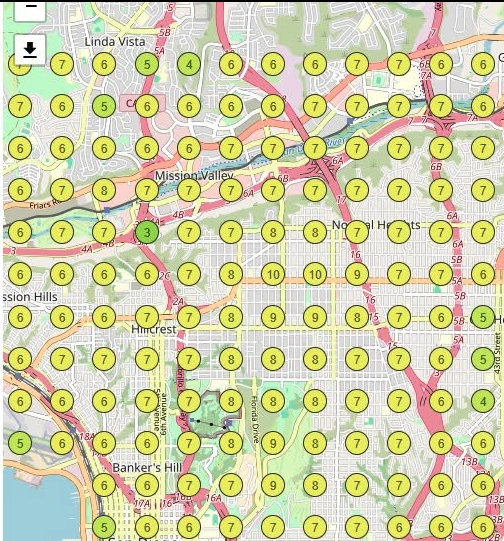
Position 6 to 8 across most of the grid. A cluster of 10s through the middle. One single 3, in one spot, which is the only place in San Diego anyone was likely to find them. A patient two neighborhoods over searching for a dentist was never going to see this practice at all.
The Work
- Recovered the Google Business Profile from the previous agency and got ownership back where it belonged.
- Optimized the profile for relevance, so the categories, services, and content on it matched what people in San Diego actually type when they need a dentist.
- Rebuilt the service pages, which had never been written to match search intent because the previous engagement was pointed at the blog.
- Improved site architecture so relevant pages linked to each other, which gave Google more context on each service.
- Built 14 links from a mix of local and dental-relevant sites, including San Diego news stations, local orthodontists and a few health publications.
14 links. Not a hundred. Local relevance beats volume in a map pack, and a link from a San Diego news station does more for a San Diego dentist than 60 low-quality citations.
What Actually Moved the Numbers
- Business Profile: Getting the profile back came first then optimizing for relevance, adding services, establishing a review system, responding to reviews. We updated the profile to describe the practice in the language patients search with. The service pages answered the searches those patients were running.
- On page changes: The service pages needed to be reworked as they were poorly optimized. Added location to the service pages as well, boosting local relevance
- Backlinks: Backlinks are votes of confidence. Relevant health links and local links made the on-page work count for more.
What Went Wrong
The first week went badly. A Google spam update landed while we were still untangling the account, and the site took a hit.
What got hit was the templated content the previous agency had been producing in volume. It had never helped the practice rank, and when the update arrived it turned from dead weight into a liability. Bad timing. It also made the case for the rest of the plan faster than any deck would have.
The Results
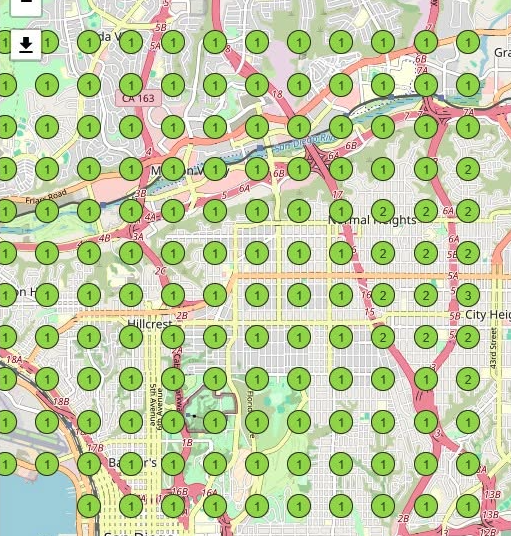
- Map pack position: from a typical 6 to 8 across the grid to a near-solid wall of 1s, with a handful of 2s and one 3 at the eastern edge
- Phone calls: up 180%
- New patients: up 230%
- New patient value: $61,000 over the first six months
- Time to profitability: month 3, against a target of month 5
Matcha Growth surpassed expectations. We were hoping to break even by month 5, but were already profitable with them by month 3.
The practice owner
What This Means for Other Dental Practices
If you are paying an agency and the deliverable you see every month is blog posts, ask them what your Google Business Profile looks like. Ask about your service pages. If the answer is vague, you are funding the wrong work.
Also, check who owns your profile. Practices discover this at the worst possible moment, usually when they try to leave. It is a five-minute check and it is the single most expensive thing on this page to get wrong.
Most practices have never seen their grid. See our local SEO service or book a 30-minute strategy call, and we will run it on your practice and show you where you actually sit.